The Inner Rhythm of Getting Shit Done
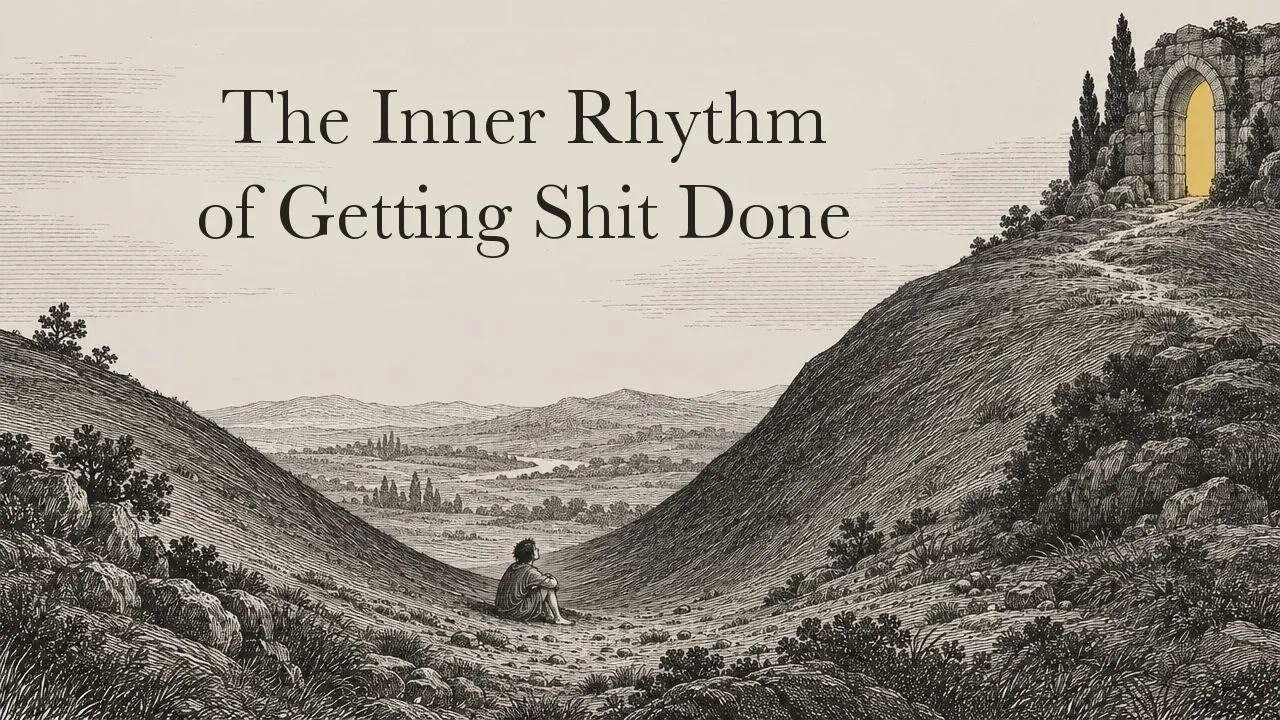
High performance lies behind a secret passage built into the human experience.
Once you get it, getting shit done and growing your capabilities become easy and feel good.
It almost pissed me off when I realized how wrong I was. I used to think time management was about efficiency. That was not just a dead end. It led me away from real progress and kept me avoiding real growth. If you notice yourself not getting important things done even though you feel like you’re trying, or you think you’re simply being inefficient with your time, I wrote this for you.
Flow starts with discomfort
We have an innate way of working at high performance: the state of flow. Sadly, getting into it means sitting with what is uncomfortable. Struggling with focus and with the feelings tied to the task we’re getting into is an inherent part of getting into flow. Not a sign that you’re bad at focusing. Just like the whole point of meditating is getting distracted and bringing our attention back. That’s uncomfortable, especially if we take it personally. “Oh no, I’m so bad at focusing” just induces shame. Which is why we often avoid this phase of struggle or let the world around us distract us from the discomfort at the beginning of a deep work session. As organisms, it also makes sense for us to ask: “Is doing this really worth it…?” This filter mechanism is built into us, and it’s a good thing it is. But in an upset and noisy world (and mind), it’s easy to let it take over way too often.
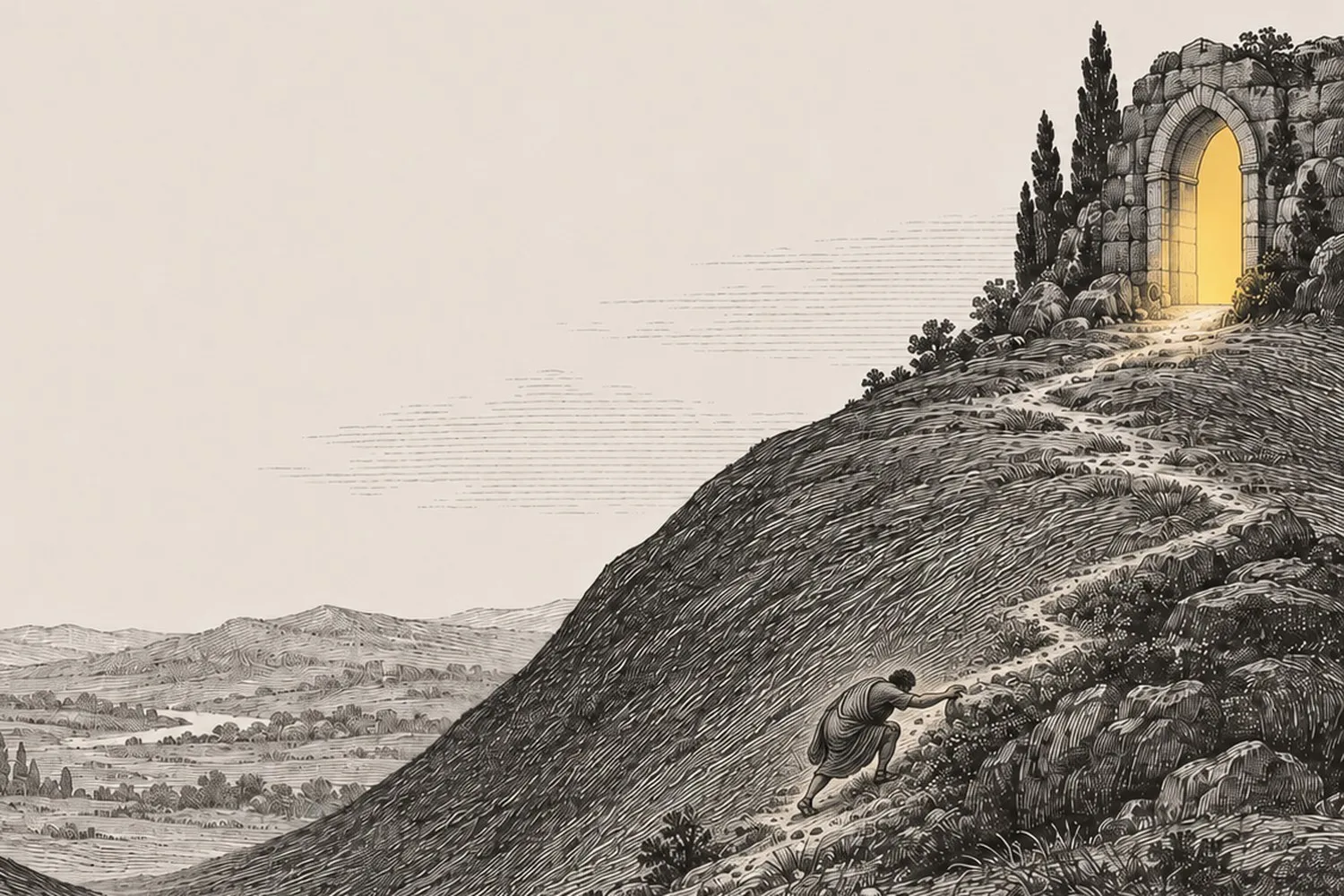
So why is going through the struggle so worth it? Once we are in flow, we can be highly effective at whatever we’re doing. We suddenly feel good about the challenge in the task. We can focus way longer than we usually do, and time just flies! And yes, especially when we’re having fun. Play induces flow very well, which is why I advocate practicing professional play. Not just because it’s a fine alliteration.
This relates to something important to understand if you’re responsible for other people doing their work well. Parents, leaders, business owners, I’m looking at you.
The main way we keep ourselves unproductive and trapped in a life we don’t want: avoiding feelings that are a necessary part of the experience of doing something, especially when it’s new.
The Gestalt wave
There is a very helpful thought model from Gestalt therapy. It describes how any experience moves from the background into awareness and toward completion. It helps me understand all sorts of stuff humans do.
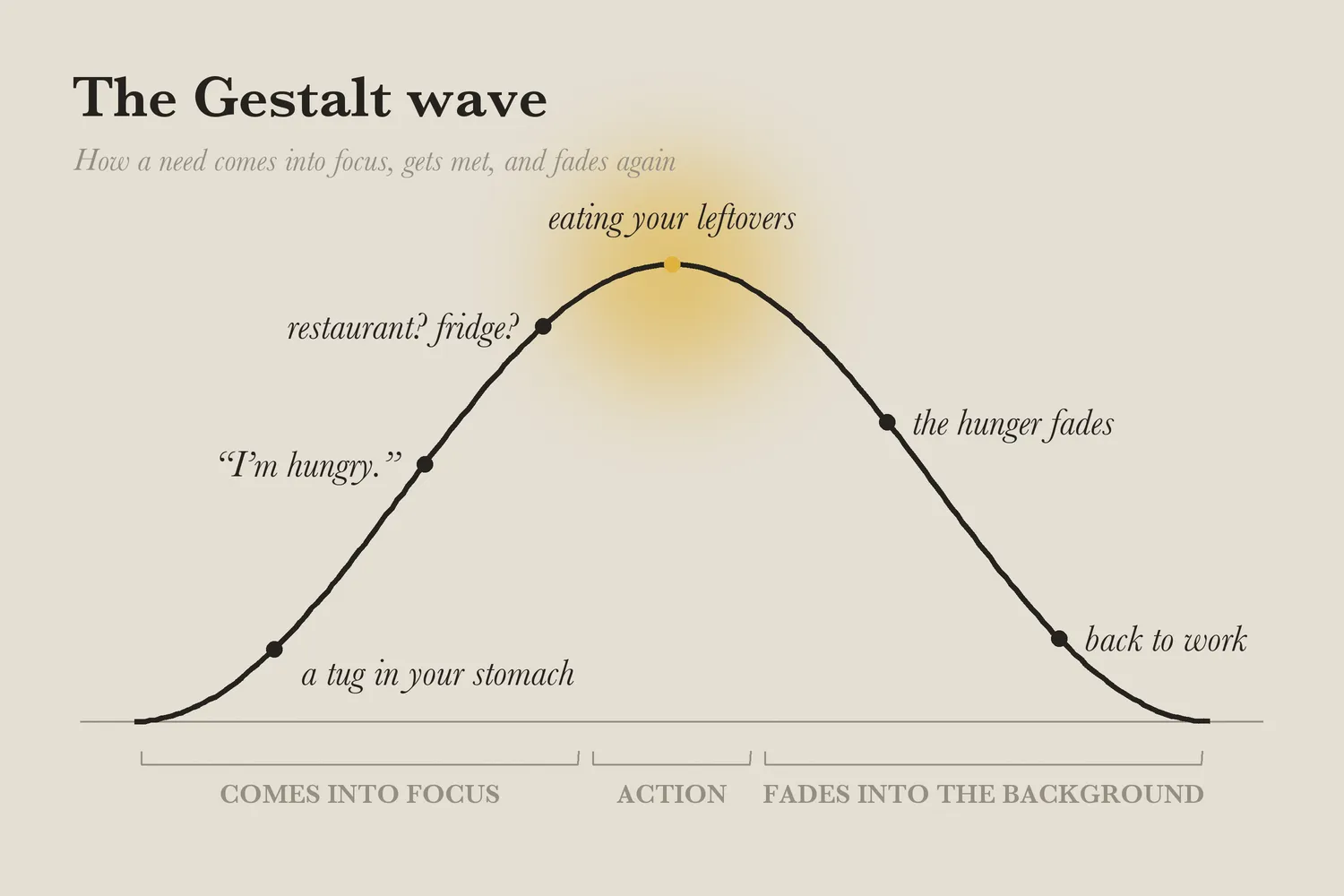
The Gestalt wave describes how any potential object of attention moves from the vague backdrop of our experience into the foreground: how we come into contact with parts of our experience. It comes into focus, moves us into action and fades into the background again once we’ve completed whatever we’re compelled to do with it.
Think of the last time you felt hungry. Maybe it was just a tug in your stomach at first. Then you realized you were hungry and started having ideas about what to do about it. “Do I want to go to the restaurant next door? What’s actually in the fridge?”
At some point, you’ve sat with the feeling long enough to get moving, and you find yourself at the fridge. You find your leftovers and eat them. The hunger fades into the background. You’re sitting at the table, and slowly you start thinking about the work you left behind.
How we interrupt what we actually need
Now consider how you could be interrupted in your process:
- You might not even feel the feeling itself because you’re numb to it by now. Which is quite common, by the way.
- You might feel it and then instantly ignore or avoid it, because there’s no food around and you don’t want to go shopping right now, or you need to finish a task first.
- You might feel it, but then shame yourself for being hungry AGAIN and push it away by grabbing your phone and opening Insta. Which you’ll probably shame yourself for later, too.
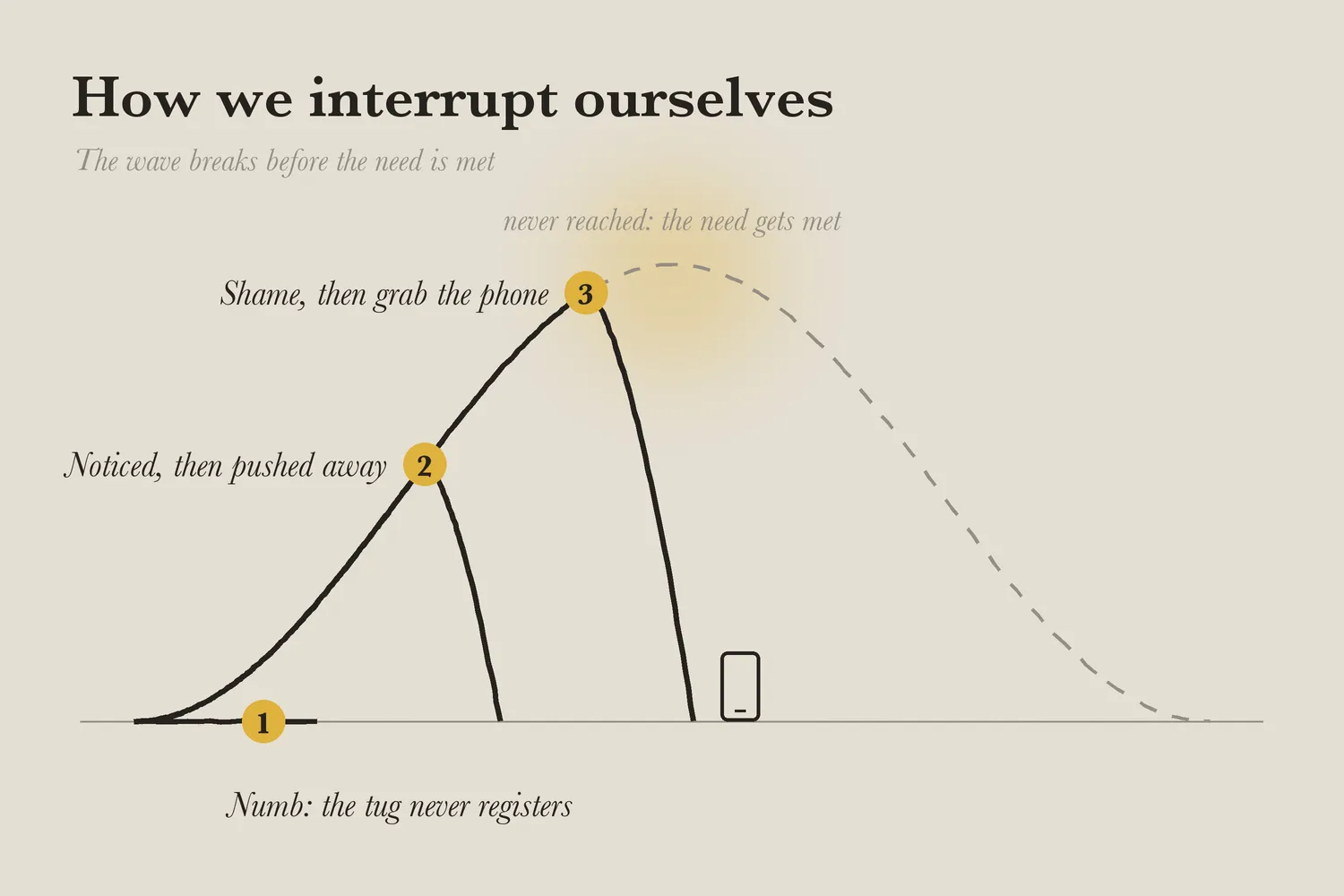
This is the exact pattern we get stuck in when avoiding flow. We could just follow the impulse to do something, but some mix of thoughts and feelings takes it away and keeps us stuck in a comfortable but constrained life. It also just makes you ineffective, which is the reason I gave you for reading this in the first place. I hope this detour was helpful anyway.
I want you to really see how this avoidance of feelings, parts of you, imagined futures, etc. is absolutely wreaking havoc on your professional progress, your creative output, your wellbeing and your development in life. Once you see this, you cannot unsee it.
Sit with the tug of war
Your mind will suggest a myriad of other options. Your subconscious doesn’t understand the time block in your calendar. You know intellectually that what you’re doing is important. But you also have to feel the emotional significance of doing it and the painful consequences of not doing it.
Then sit with the tug of war inside you until your system finally accepts that this is the thing to do now.
*According to data published by McKinsey & Company, top executives operating in a flow state report being at *500% productivity compared to when they’re not.
Have I mentioned that it also feels better?
I really don’t want you to subjugate yourself to some insane productivity-over-everything ideal. That’s not what this is about. This is about enjoying life and getting shit done that needs to get done. So give yourself enough time to sit with the discomfort until the passage to the treasury of flow opens for you. It will make life richer on all ends, and you get to enjoy the timeless bliss of this state of mind.
This ain’t just my opinion. A 2023 meta-analysis of 113 studies with over 60,000 people found that flow benefits not just work, but personal wellbeing too. If you want to follow up, it’s a good place to start. But before:
How do you get into flow? Let’s talk about this in the comment section!